Custom Software Development Services for Businesses That Outgrew Their Tools

TechnBrains is a custom software development company for businesses that have outgrown their software, whether that means tools that never sync, a SaaS product that misses the part that matters, or a legacy system nobody wants to touch.

We fix that by building software around your process instead of asking your team to bend to the tool. That can mean one connected platform in place of scattered apps, automation for the work people still do by hand, or a modernized system that keeps the business running while it changes. Senior engineers lead the conversation from your first meeting.

See Our Work

What is custom software development?

Custom software development is the design and build of software around one company's requirements, workflows, users, and connected systems. A packaged product is built for a general market; custom software is built for yours.

150 +
products delivered
12 +
years building software (since 2013)
94 %
client retention
4.7
rating on Clutch

Build, Customize, or Modernize: Which Path Fits?

Most engagements start one of three ways: a custom build from scratch, an implementation of a platform you already pay for, or modernization of a system you cannot afford to replace. The right one depends on how much of your process is standard and how much of it is your advantage.

Build custom from scratch

Choose this when the process itself is what sets you apart, or when the integrations you need do not exist off the shelf.

Custom software application development for products and internal systems where no vendor covers your workflow.

Implement and customize a platform

Choose this when most of your process is standard and you want a shorter path to go-live.

Salesforce, Odoo, ServiceNow, or MuleSoft configured around your operations, with custom modules where the platform stops.

Modernize what you already run

Choose this when the system still holds the data and rules you need, but every change has become slow and risky.

Rebuilding the foundation of a legacy application without stopping the business that depends on it.

Our Custom Software Development Services

As a custom software development company, TechnBrains covers the full lifecycle: consulting before you commit, design, development, integration, testing, deployment, and the support that keeps a system running after launch. Each engagement is scoped with UI/UX design, security review, quality assurance, and post-launch support, confirmed in your statement of work.

Custom software development consulting

Custom software development consulting

Technology audits, architecture planning, and stack selection before you commit budget to a build. Prevents a costly early mistake: building the right thing on the wrong foundation.

Custom web application development

Custom web application development

Web applications for customer portals, internal tools, and operational platforms, built around your roles and permissions so the system enforces the process and nobody has to remember it.

Custom mobile software development

Custom mobile software development

Mobile app development covering native iOS app development and Android app development, on a shared backend and data layer with your web and enterprise systems. Your mobile app never turns into an island with its own data.

Custom enterprise software development

Custom enterprise software development

Enterprise applications that connect departments and automate cross-team workflows: ERP-adjacent systems, approvals, reporting, and document flows. Reporting stops being a monthly project stitched together from department tools.

SaaS and custom software product development

SaaS and custom software product development

SaaS platforms with multi-tenancy, billing, and an architecture that moves from MVP to a product that survives its own growth. Prevents the rebuild at 500 customers.

Custom AI software development

Custom AI software development

AI and machine learning built into applications for document processing, intelligent search, forecasting, and decision support. AI takes the repetitive work and your domain experts keep the judgment calls, with each feature scoped to a workflow that has measurable value.

Cloud-based software development

Cloud-based software development

Cloud-native applications on Azure, AWS, or Google Cloud, or existing systems moved to modern infrastructure without a big-bang cutover. CI/CD pipelines and monitoring are set up by our DevOps services team.

API and backend development

API and backend development

APIs, connection layers, and backend architecture connecting your applications, databases, and third-party platforms. No more point-to-point connections that break every time one vendor changes a field.

Custom web portal development

Custom web portal development

Customer, partner, and employee portals that give each user group a secure, role-based view of the data and workflows they need, connected to your CRM, ERP, and billing systems. People serve themselves, so the support inbox and spreadsheet exports stop filling the gap.

Legacy software modernization

Legacy software modernization

Legacy application modernization through re-architecture, codebase upgrades, cloud migration, and UI updates, delivered in stages so the business keeps running. Prevents the risky big-bang rewrite and the slow decline of a system nobody can safely change.

Not Sure Which Service Your Project Needs?

Tell us what your team is working around today. An engineer will review your workflows and existing systems, recommend the build, platform, or modernization path that fits, and send you a written summary.


Proven Software Development Results

Custom software delivered measured results for clients in logistics, property services, consumer goods, enterprise web, training, and construction. Every figure below comes from the linked case study.

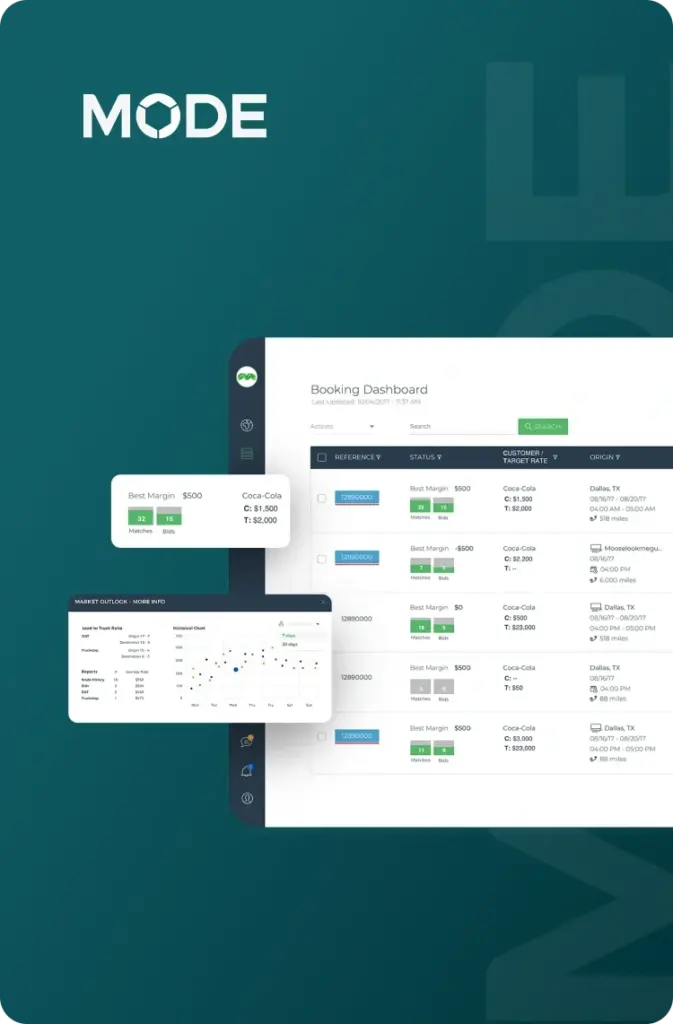
MODE Transportation
Logistics · Software outsourcing · 7 to 8 specialists · 18 months

MODE Transportation

What we built

A connected freight platform handles carrier management, bidding, dispatch, and shipment tracking across millions of daily records. Separating high-volume processing from daily operations cut peak processing overhead by 27%, moved freight workflows 31% faster, and reduced manual status checks by 33%. Built on .NET, SQL Server, and Azure.

50,000+ carriers on one platform
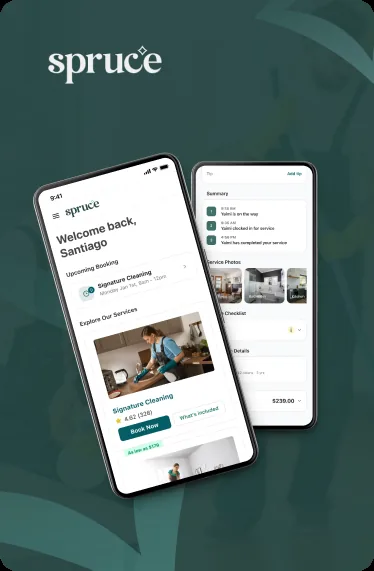
Get Spruce
Property services · Dedicated team · 7 to 9 specialists

Get Spruce

What we built

A mobile-first field operations platform replaced fragmented tools with one system for dispatch, capacity, and pricing across US markets. Pricing inconsistencies fell by roughly 70%, and the platform now serves 685K+ customers. Built on React, React Native, Node.js, and PostgreSQL.

Scheduling improved 50% to 60%
Coca-Cola
Consumer goods · Staff augmentation · 6 specialists

Coca-Cola

What we built

Design, engineering, QA, architecture, and DevOps specialists joined the client's teams ahead of a major campaign launch and held 99.98% platform uptime under peak load.

2M+ peak users at launch
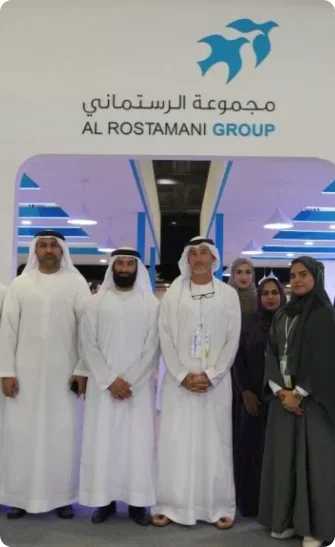
Al Rostamani Group
Multi-brand enterprise · 4 specialists

Al Rostamani Group

What we built

Six division websites rebuilt on reusable components with bilingual, editor-managed publishing. Page loads are roughly 47% faster and content updates take roughly 68% less time.

3.2x more enquiries
Nokia Al-Saudia
Training and EdTech · 5 to 7 specialists

Nokia Al-Saudia

What we built

Manual enrollment and certificate processing automated on a rebuilt training platform, cutting administrative workload by about 40%.

About 68% faster enrollment
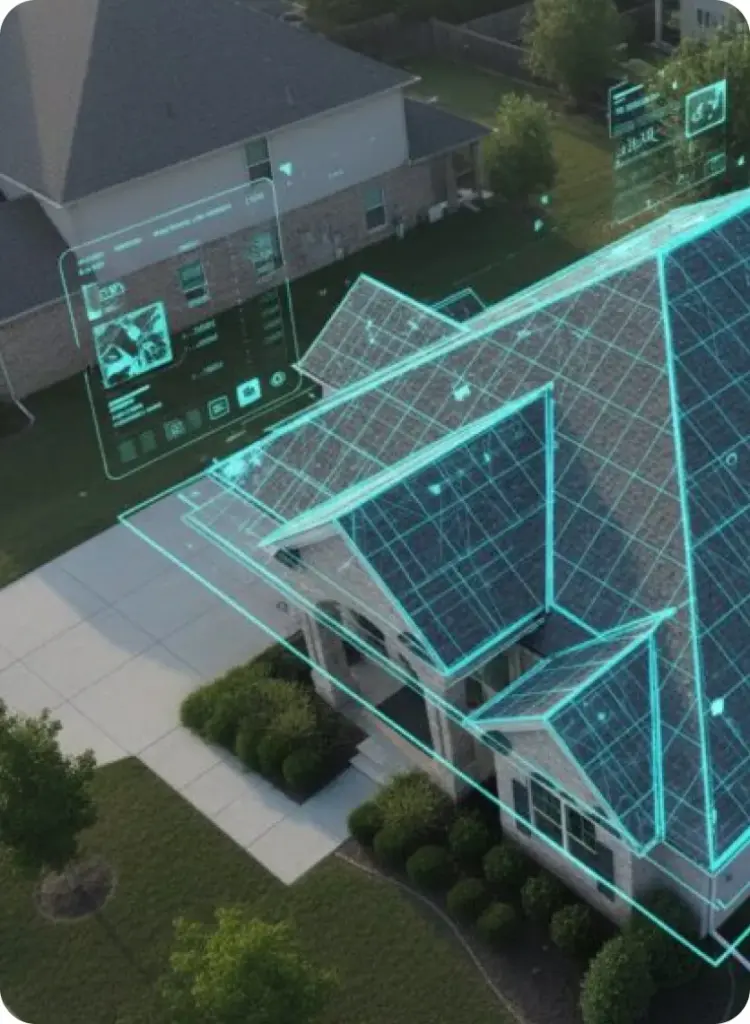
Roofing estimation platform
Construction · Dedicated team · 7 to 9 specialists

Roofing estimation platform

What we built

Satellite imagery and computer vision replaced manual roof measurement, connected to pricing rules, crew tracking, and a customer portal, with a production gain of roughly 30%.

Estimates in minutes instead of days

Business Problems We Solve

We solve the problems packaged tools create once a business outgrows them: disconnected systems, manual work that scales with headcount, licensing that punishes growth, and compliance requirements a generic product was never built for. These are the problems clients bring to the first call most often.

“Our data lives in five systems and none of them agree.”

Sales sit in a CRM, jobs in a spreadsheet, invoices in accounting software, and a weekly meeting reconciles them. We build the integration layer or the single operational record that ends the reconciliation.

“Every new customer means another hire in operations.”

When scheduling, dispatch, approvals, or reporting are done by hand, growth adds cost at the same rate it adds revenue. We automate the workflow so throughput grows faster than payroll. Get Spruce came to us with this exact problem.

“The SaaS tool does most of what we need and blocks the rest.”

You pay per seat for a product that shapes your process instead of following it. We either build the missing piece around the platform or replace it with something that fits. The decision framework is further down this page.

“We are a regulated business and generic software makes us nervous.”

Healthcare data under HIPAA, payment and banking flows under PCI DSS, personal data under GDPR, and enterprise procurement asking for SOC 2 evidence. We build compliance into the architecture instead of auditing it in afterward.

Custom Software, Off-the-Shelf, or Platform Customization: Which Should You Choose?

Choose off-the-shelf software when your process is standard and speed matters more than fit. Choose platform customization when a product like Salesforce or Odoo covers most of your workflow and you need the remainder built around it. Choose custom software development when the process is your competitive advantage, when integrations do not exist, or when licensing costs grow faster than your business.

Off-the-shelf
Platform customization
Custom software
Fit to your process
You adapt to the tool
Platform core plus custom modules
Built around your workflow
Time to first value
Days to weeks
Weeks to months
Months
Cost shape
Per-seat subscription that grows with headcount
License plus build
Higher upfront; removes per-seat licensing for the custom layer, though hosting and third-party tools still carry running costs
Integration
Limited to vendor APIs
Strong within the platform ecosystem
Broad, subject to API access, vendor restrictions, and a feasibility check during discovery
Lock-in
High
Moderate
Low: you control the code and architecture, while hosting and third-party services keep their own terms
Best when
Standard process, small team
Mostly standard process with specific gaps
Process is the advantage, or scale makes licensing expensive

When custom is not the right call

If a packaged product covers your process through configuration alone and nobody is asking for integrations it cannot make, buy the product. We will say so on the scoping call. Our read: Use a platform when the process is standard, and build custom when the process is the business. The most expensive mistake we see is a custom rebuild of something a platform already does well, and the second is a platform bent so far from its design that every upgrade breaks it.

Custom Software Solutions by Business Function

Find your system by the part of the business it runs. Our enterprise software development services map to the systems businesses run on, grouped by business area below.

Industries We Serve

Software has to reflect the environment it operates in. These are the industries where we have shipped custom systems, and the build concern that comes up first in each.

Healthcare

Healthcare app development for patient platforms and provider workflows, built to HIPAA with HL7/FHIR data exchange.

Fintech

Fintech software development for payment processing, settlement, fraud detection, and banking APIs, built to PCI DSS.

Logistics

Logistics software development for fleet management, dispatch, carrier networks at volume, and transportation management systems.

Real Estate

Real estate app development for property management, MLS-integrated listings, and transaction workflows.

Construction

Custom software development for construction covering job costing, field coordination, estimating, and crew management.

Automotive

Custom automotive software development for fleet solutions, telematics, and connected mobility.

Education

Custom LMS software development, learning platforms, and multi-tenant systems.

Energy and utilities

Custom energy management software development for monitoring and asset performance.

Retail and ecommerce

Custom retail software development for inventory, checkout, and omnichannel commerce.

On-demand platforms

On-demand platform development for matching, dispatch, and dynamic pricing under fluctuating demand.

Our Custom Software Development Process

A typical custom software project takes 3 to 9 months from discovery to production, depending on scope, connected systems, and compliance. The process runs in seven phases, and you see working software from the first sprint, not at the end.

  1. Discovery and requirements analysis

    We map your business objectives, users, workflows, existing systems, and constraints. You get a written scope and the list of assumptions behind the estimate.

  2. Planning and architecture

    Scope, timeline, budget, team, and the technical architecture, including the integration map. You get a plan you can hold us to.

  3. UI/UX design

    Interfaces designed around the roles that will use them, prototyped and validated before development. You get clickable prototypes, not static screens.

  4. Development

    Agile sprints with a demo of working software at the end of each one, so there is no big reveal at month six.

  5. Testing and QA

    Functional, performance, security, and compatibility testing alongside development, then user acceptance testing with your team.

  6. Deployment

    A staged rollout to production with rollback plans, monitoring, and knowledge transfer, so your team is never handed a system it cannot operate.

  7. Support and evolution

    Maintenance, monitoring, and continued feature development as your needs change.

Each phase is broken down further in our walkthrough of the software development lifecycle. What we see in real projects: Timelines slip in requirements, not in development. A project that spends two more weeks agreeing what “done” means saves two months of arguing about it later.

What You Receive After the Discovery Meeting

Discovery starts with a free meeting of two to three hours, where our engineers learn your idea, the workflows behind it, and the systems it has to work with. You leave with a written summary and a recommended path. Once the project starts, the requirements and planning phases deliver:

Requirements documentation

Requirements documentation

Users, roles, workflows, and acceptance criteria, written so your team can check them line by line.

Architecture options

Architecture options

Two or three approaches with the cost, timeline, and maintenance trade-offs of each, plus our recommendation.

Initial integration map

Initial integration map

Every system the software touches, how it connects, and which connections need a prototype before development starts.

Risk register

Risk register

The integrations, data quality issues, and compliance requirements most likely to affect cost or timeline, each with a mitigation.

Milestone plan and approval points

Milestone plan and approval points

The dates and decisions where you sign off on scope, budget, and architecture before the next phase begins.

Custom Software Development Costs and Pricing Models

Custom software development cost is driven by five things: scope, the number and complexity of integrations, compliance requirements, the depth of the user experience, and the engagement model. Two systems with the same feature list can land at very different prices because of these factors alone.

  1. Scope

    The number of user roles, workflows, and edge cases. A system for two roles costs a fraction of one for seven.

  2. Integrations

    Each external system adds discovery, development, and testing. Legacy systems without APIs cost the most.

  3. Compliance

    HIPAA, PCI DSS, GDPR, and SOC 2 requirements add architecture, logging, and documentation work that cannot be skipped.

  4. UX depth

    A back-office tool for trained staff and a consumer product for first-time users are different design investments.

  5. Engagement model

    Staff augmentation, a dedicated team, and full outsourcing carry different overheads and different levels of accountability on our side.

Our custom software development cost guide breaks down the drivers in more detail. We price every engagement from a scoped discovery, not a feature list. As a guide, focused tools start under $30,000, mid-size platforms run $30,000 to $100,000, and enterprise systems start around $100,000. Pricing models. We offer four: fixed-scope pricing for well-defined projects, flexible time-and-materials pricing for products that will evolve, long-term engagements for continuous development, and phase-based billing tied to delivery stages. The discovery meeting tells us which one fits, and we recommend it rather than defaulting to one. What we see in real projects: Estimates drift when integrations are counted late. Ask any vendor for the integration list behind their number; if they do not have one, the number is a guess.

Engagement Models: Outsource, Dedicated Team, or Augment

There are three ways to work with TechnBrains, matched to how much control and delivery ownership you want to keep. Matching the model to your stage: startups usually choose a dedicated team or full outsourcing to ship a custom MVP without a hiring cycle. Small and mid-size businesses often start with one high-impact workflow under outsourcing and expand from there, while enterprises tend to combine staff augmentation with a dedicated team that works inside their governance and security review.

Staff augmentation

Best for filling a capability gap or a deadline crunch while you keep full control.

Senior frontend, backend, mobile, QA, or DevOps engineers embedded in your existing team, working in your tools and sprints.

Dedicated team

Best for long-term product development and continuous scaling.

A complete cross-functional custom team (developers, designers, QA, and project management) focused on your roadmap and accountable for delivery.

Software outsourcing

Best for custom software development outsourcing without in-house engineering overhead.

TechnBrains owns the full lifecycle from discovery through deployment and support, while you own the product and the code.

Integration, Migration, and Risk Management

Custom software projects fail for four repeatable reasons: scope that grows without a change process, integrations discovered late, security treated as a final checklist, and no owner after launch, which the next section covers. Each one costs far less to fix at the start than at the end. In practice: on MODE Transportation, we separated high-volume processing from daily operations, which cut peak processing overhead by 27%. For Al Rostamani Group, six division websites were rebuilt on shared, reusable components with bilingual, editor-managed publishing.

Assessing what you already run

We start by reviewing every system the new software must work with: what data it holds, whether it exposes an API, who owns it, and how clean its data is. Risky connections are prototyped first, so a missing API or a rate limit shows up in week two instead of month five.

Code Ownership, Handover, and Long-Term Support

You own what we build for you. Contracts assign the source code, designs, and documentation to your company, and the project setup keeps you in control of it.

Repositories

Repositories

Code is hosted in our repository during the engagement and transferred to your organization's account whenever you ask.

Cloud environments

Cloud environments

Development, staging, and production run in your cloud account from day one, so your system never depends on our infrastructure.

Third-party licenses

Third-party licenses

Listed in a license register and held in your name.

Documentation

Documentation

Architecture documentation, API references, and runbooks are delivered with the system.

Knowledge transfer

Knowledge transfer

Recorded sessions bring your team, or a future vendor, up to speed.

Ongoing support

Ongoing support

Support and maintenance covers monitoring, security updates, bug fixes, and new features, with response times defined in your support plan.

Why Choose TechnBrains as Your Custom Software Development Company

TechnBrains is a custom software development company in the USA, founded in 2013 and headquartered in Addison, Texas, with offices in New York, Houston, and Austin. It has delivered 150+ products and keeps 94% of its clients.

Industry judgment, engineered into your software

Industry judgment, engineered into your software

We turn industry judgment into software engineered for where your business goes next. Our logistics leads built MODE Transportation's 50,000-carrier freight platform and our construction leads built the roofing estimation platform, so discovery starts from how your industry already works.

Engineers from the first call

Engineers from the first call

A senior engineer leads your discovery meeting, and the technical lead who designs your architecture stays on the project through delivery, so nothing gets lost between a sales promise and a delivery plan.

A delivery record you can check

A delivery record you can check

150+ products delivered, 94% client retention, a 4.7 rating on Clutch, and reviews on GoodFirms, AppFutura, and Expertise.com. Every result on this page links to a case study with the figures behind it.

Security built in

Security built in

Role-based access, encryption in transit and at rest, vulnerability testing, and compliance requirements handled in the architecture, not in a final audit.

One accountable team for the full lifecycle

One accountable team for the full lifecycle

Consulting, design, development, integration, testing, deployment, modernization, and support stay with the same team, so the people who built your system are the ones supporting it after launch.

Kazim Qazi
Many clients reach us after a first build that worked technically but did not fit how their business runs. Our industry leads spend discovery closing that gap, so the system we deliver reflects the rules, workflows, and integrations your team deals with every day.
Kazim Qazi CEO, TechnBrains · Forbes Technology Council

What Our Clients Say

TechnBrains resolved challenges efficiently and turned my vision into a solid, functional product with a strong foundation.
Streamline Live Jalen Gibbs, Founder
Clutch

Rated 4.7 on Clutch

Technology Expertise

We select the stack from your requirements, existing infrastructure, and long-term maintainability, not from what is popular this year. Our engineers work in every technology below, and the main frameworks link to their technology pages.

Languages

Java
C#
C++
PHP Python
JavaScript
TypeScript
Ruby
Swift
Kotlin
Go
Rust

Our US Offices

  • Dallas skyline at sunset

    Dallas

    Headquarters

    15305 Dallas Pkwy, 12th Floor, Suite 1257, Addison, TX 75001 (833) 888-6032
  • Aerial view of the Austin skyline

    Austin

    3801 N Capital of Texas Hwy, Austin, TX 78746 (737) 241-1469
  • Houston skyline beside a river bridge at dusk

    Houston

    4201 Main St, Suite 200-122, Houston, TX 77002 (346) 537-1202
  • Statue of Liberty in front of the New York City skyline

    New York

    165 Broadway, Suite 1007, 23rd Floor, New York, NY 10006 (646) 759-0975

Frequently Asked Questions

Custom software development is the design and build of software around one company's requirements, workflows, users, and integrations, rather than a product built for a general market. It includes discovery, architecture, design, development, testing, deployment, and ongoing support, and is also called bespoke software development or custom application development.

Choose custom software when a packaged product forces workarounds on a process that matters, when the integrations you need do not exist, or when per-seat licensing grows faster than your business. You get ownership of the code, greater control over your architecture, and a system that changes when your process changes. Off-the-shelf software wins when your process is standard and speed to value matters most.

Custom software development cost depends on scope, the number and complexity of integrations, compliance requirements, UX depth, and the engagement model. Projects with similar feature lists can land at very different prices because of those factors. As a guide, focused tools start under $30,000, mid-size platforms run $30,000 to $100,000, and enterprise systems start around $100,000. We price from a scoped discovery rather than a feature list, and our cost guide breaks down the drivers.

A typical custom software project takes 3 to 9 months from discovery to production. A startup MVP lands at the shorter end, and an integration-heavy enterprise system with compliance requirements lands at the longer end. Either way, you see working software from the first sprint.

Start with their case studies in your industry and ask for figures you can verify. Confirm the team works in the technologies your system needs, and ask what they would choose for you and why. Ask how they handle scope changes, what security practices are built into development, and what post-launch support looks like. Finally, make sure the people scoping your project are the people who will build it.

Outsourcing wins on speed to start and access to specialists you cannot hire for every project, while in-house wins on proximity and long-term product ownership. Many clients combine both: an in-house product owner and core team, with outsourced delivery or augmented engineers for capacity and specialist skills. IP and data are protected through NDAs, contracts that assign code ownership to you, and security controls on our side.

Choose staff augmentation if you have a team and need capacity or a specific skill. Choose a dedicated team if you have a roadmap and need a full team accountable for it. Choose software outsourcing if you want delivery handled from discovery through support.

Four: fixed-scope, time-and-materials, long-term engagement, and phase-based billing. The pricing section above explains when each fits, and we recommend one after discovery.

You do. Contracts assign ownership of the source code, designs, and documentation to your company on delivery. Code is hosted in our repository during the engagement and transferred to your account whenever you ask, and your cloud environments sit in your own account from day one.

Yes. We assess the existing application for architecture modernization, codebase upgrades, cloud migration, performance improvements, and UI modernization, then plan the work in stages so the business keeps running throughout, including application, database, and data migration to cloud infrastructure.

Yes. Support and maintenance covers monitoring, bug fixes, security updates, performance optimization, and continued feature development, with the documentation and knowledge transfer your team needs to operate the system.

Yes. Our offices are in Addison, Austin, Houston, and New York, and we build custom software for companies across the United States, with scoping calls, sprint reviews, and support on US business hours.

Scope Your Custom Software Project With an Engineer

Bring the problem rather than a finished spec. In a free discovery meeting of two to three hours, our engineers map what the system needs to do, which connected systems and compliance requirements are in play, the engagement model that fits, and the risks worth knowing before you commit budget. You leave with a written summary whether or not you hire us for custom software development services.

Addison (Dallas Metro) headquarters · Austin · Houston · New York · serving companies across the United States.

See Our Work