Build and Scale Faster
150+ products shipped for startups and enterprises by engineers focused on real outcomes.
"Their ability to quickly understand an unfamiliar use case and respond creatively to it is impressive."

Anonymous
Executive, Pured Disc Golf

"TechnBrains resolved challenges efficiently and turned my vision into a solid, functional product with a strong foundation."

Jalen Gibbs
Founder, STREAMLINE LIVE
"The talent they provided was solid, but more importantly, they were quick to align with our way of working."

Nancy Snyder
Managing Director, MimeCast
Our trusted clients


Start Your Product Journey Today
Turn your idea into a working product. Share a few details and we'll help define the roadmap, timeline, and execution approach.
Logistics Software Development Services
Your logistics stack should help teams make faster decisions, not create more work between systems.
TechnBrains builds, integrates, and modernizes logistics technology around real operating workflows, helping carriers, brokers, 3PLs, and shippers reduce manual handoffs, improve visibility, and keep dispatch, operations, and billing aligned.
Compliance-aware workflows built around HOS, ELD, and FMCSA requirements
Connected logistics systems across dispatch, tracking, documents, and billing
Built for live operations with real-time, offline, and exception-ready workflows
Why Choose TechnBrains for Logistics Software Development?
Our logistics software solutions are designed around the challenges teams face every day: reducing manual work, improving shipment visibility, and keeping critical transportation workflows connected as operations grow.
15
Featured logistics and transportation projects
50,000+
Carriers supported across a transportation technology environment
4
Connected applications across shipper, carrier, driver, and admin workflows
5-day
Automated settlement workflow
Custom Logistics Software We Build
Most logistics operations do not lack software. They run four or five systems that do not share information, and people cover the gaps: retyping shipments, making status calls, chasing PODs, reconciling invoices. We build custom software where packaged products cannot match your rates, dispatch rules, or workflows, and we connect the systems worth keeping.

Transportation Management Software Development
We build and extend TMS platforms for load planning, carrier management, rating, tendering, dispatch, shipment tracking, document handling, and billing handoffs. Custom development makes sense when pricing rules, accessorial logic, customer requirements, or operational workflows require workarounds outside the TMS. We can build those capabilities into the platform or extend an existing system rather than replacing it unnecessarily.

Trucking Dispatch Software Development
We build dispatch software that brings load requirements, driver availability, equipment status, HOS, and appointment windows into one working view. Assignment rules can reflect the way your operation actually dispatches, including driver eligibility, equipment availability, customer requirements, and other operating constraints. The goal is to reduce manual checks and catch assignment conflicts before a load is committed.

Route Optimization Software Development
We build route optimization software around the constraints that matter to commercial transportation, including vehicle dimensions, driver hours, delivery windows, stop sequencing, route restrictions, and customer-specific requirements. This is useful when dispatchers regularly override generic routing tools because the suggested route does not reflect how the fleet actually operates.

Fleet Management Software Development
We build fleet management software that connects vehicle location, maintenance, engine data, fuel, and equipment availability with dispatch planning.
When a vehicle goes on maintenance hold, dispatch should see that change immediately. ATRI's 2026 research found repair and maintenance costs rose 8.6% in 2025 to 40.4 cents per mile, making fleet visibility more important.

Logistics App Development Services
We build driver, dispatcher, and customer-facing logistics apps for workflows outside the office.
Driver apps can support offline work, POD, photos, signatures, inspections, HOS-aware tasks, and document submission. Data syncs when connectivity returns, helping records reach operations and billing faster. These capabilities are delivered through our mobile app development practice.

Freight Logistics Software Development
We build freight software for brokers, 3PLs, marketplaces, and transportation businesses that need pricing, load execution, carrier workflows, documents, payments, and settlement in one operating environment. Typical capabilities include load matching, freight pricing, carrier and shipper workflows, freight audit, document management, settlement, and load-level margin visibility.

Shipment Tracking Software Development
We build shipment tracking systems that give operations and customers a current view of shipment progress. Capabilities include real-time tracking, ETAs, geofence events, exception alerts, customer portals, and billing-connected shipment records. ATRI found detention at 39.3% of stops, creating $15.1 billion in costs and lost productivity. Tracking software helps preserve arrival times, dwell records, evidence, and rate rules for detention billing.

Warehouse and Supply Chain Software Development
We build warehouse and supply chain software where inventory and fulfillment workflows need to connect directly with transportation. That can include inventory visibility across locations, inbound and outbound coordination, order management, dock activity, shipment readiness, and data exchange between WMS, TMS, and dispatch workflows.
Need a Logistics Workflow Your Current Software Can’t Support?
Keep the systems that already work. We can build the missing workflow, connect disconnected tools, or extend your platform around your operations.
Our Logistics Software Development Services
We provide custom logistics software development services that help carriers, brokers, 3PLs, shippers, and fleet operators streamline transportation workflows, connect fragmented systems, improve shipment visibility, and automate manual processes.

Logistics Software Consulting
We map representative loads, user workflows, connected systems, business rules, operational handoffs, and exceptions before recommending a solution to identify the right fix: build, integrate, extend, or improve the process.

Custom Logistics Software Development
We build logistics platforms when an operation has workflows, pricing logic, dispatch rules, customer requirements, or multi-party processes that packaged software cannot model cleanly.

Logistics Software Integration
We connect TMS, ELD, telematics, WMS, ERP, accounting, carrier APIs, customer portals, and other systems so operational information follows the shipment instead of being entered repeatedly.

Logistics App Development
We build logistics apps for drivers, dispatchers, and customers across iOS, Android, and React Native. Apps can support offline workflows, POD capture, live tracking, inspections, document uploads, and real-time sync with TMS, ELD, telematics, and billing systems.

Legacy Modernization, Extension and Migration
We modernize legacy logistics platforms, extend existing systems with new workflows and features, customize integrations and interfaces, and migrate applications to current architectures with minimal disruption to live operations.

Support and Optimization
Post-launch support covers integration monitoring, fixes, performance issues, platform changes, and additional workflows as the operation evolves.
Logistics Management Software Development
We build logistics management software when several parts of the operation need to work together instead of being managed through separate tools and manual handoffs.
For some companies, this becomes a complete custom logistics management platform. For others, we build the missing operational layer around an existing TMS, WMS, ERP, fleet, or accounting system. The goal is consistent shipment, cost, and performance data without rebuilding the operational picture from multiple exports.
By Operator
Transportation Software Development for Carriers, Brokers, 3PLs and Shippers
Transportation software requirements change depending on the role a business plays in moving freight. We build around the workflows each operator owns.

Carriers and Private Fleets
- Dispatch and load execution
- Driver and equipment management
- Maintenance-aware availability
- Driver settlements
- Route execution
- Customer shipment visibility

Freight Brokers and 3PLs
- Load management
- Carrier onboarding and management
- Pricing and margin visibility
- Document collection
- Claims and settlements
- Multi-mode customer reporting

Shippers
- Transportation planning
- Dock scheduling
- Carrier selection and scorecards
- Tendering
- Shipment visibility
- Exception management

Multimodal Operators and Marketplaces
- Multi-mode shipment workflows
- Partner and role management
- Shared shipment events
- Documents and approvals
- Carrier, shipper, and driver views
- Cross-system coordination
The software should reflect the transportation model rather than forcing carriers, brokers, 3PLs, and shippers into the same workflow.
Technologies We Build Into Logistics Software
We use AI, telematics, automation, computer vision, and cloud infrastructure where they solve a clear logistics problem. The technology should reduce manual work, improve decisions, or give operations better information, rather than exist as a feature on its own.

AI and Machine Learning
We apply AI where logistics teams need predictions or must process large volumes of operational data.
Use cases include predictive ETAs, load matching, pricing recommendations, demand forecasting, document extraction, and exception prioritization. Rules such as HOS eligibility, contracted rates, maintenance holds, and compliance remain rule-based and auditable.

IoT and Telematics
We connect GPS, geofencing, temperature, fuel, engine, equipment condition, and other telematics data with operational workflows.
This can support live vehicle status, cold-chain monitoring, maintenance triggers, customer tracking, and automated arrival or departure events.

Workflow Automation and RPA
We automate repetitive work that still moves manually between teams and systems.
Examples include shipment updates, POD-to-billing workflows, carrier document collection, exception routing, portal updates, and logistics-to-finance reconciliation. AI-assisted automation can also handle routine follow-ups with approval controls where needed.

Computer Vision
Computer vision supports image-heavy workflows such as POD verification, damage documentation, document capture, barcode recognition, and selected yard or dock inspections.
We use it where visual data can reduce manual checks or create stronger operational records.

Warehouse Automation Integration
We connect WMS and order systems with scanners, conveyors, AMRs, and other material-handling systems.
These integrations keep inventory movement, fulfillment status, and transportation planning synchronized as goods move from warehouse operations into dispatch.

Cloud and Data Engineering
We build the data foundation for real-time logistics software, including integrations, event processing, reporting, and analytics.
This can include AWS, Azure, or GCP infrastructure and tools such as Power BI, bringing TMS, telematics, fleet, warehouse, and finance data into one operational view.
Logistics Software Development Case Studies
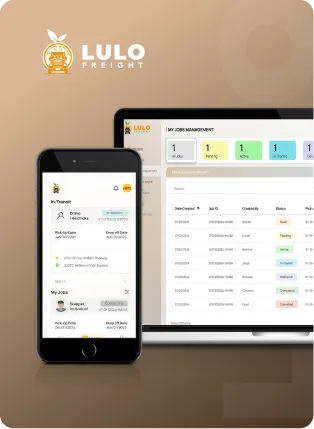
Lulo Freight
4
connected applications
1-mile
arrival & delivery geofence
5-day
automated settlement window
From Excel Quotes and Phone Updates to Quote-to-Settlement in One System
Quotes were built in Excel, tracking relied on calls and emails, and PODs, detention, carrier documents, and settlement were handled across separate processes. We built a shipper portal, carrier portal, driver app, and admin console with automated quoting, load matching, GPS tracking, digital BOLs, detention pricing, carrier verification, and milestone payments.

MODE Transportation
200+
offices
50,000+
carriers
6
transportation modes
Supporting Transportation Workflows Across 200+ Offices and 50,000+ Carriers
Transportation workflows had to work across thousands of carriers, multiple freight modes, and providers with different integration maturity. TechnBrains supported the technology environment connecting transportation workflows across MODE's network.
View Full Case Study

Y-Drive
1
shared platform
3-way
automated payment split
5
driver trip states
From Market-by-Market Dispatch Builds to One Configurable Multi-Tenant Platform
Every market needed different drivers, zones, fares, corporate accounts, and operating rules, making separate builds expensive to maintain. We built a multi-tenant platform with rule-based dispatch, driver apps, live fleet tracking, configurable fares, corporate billing, and automated payment splitting.

Fix Car Sharer
30%
Increase in user satisfaction
40%
Improvement in trust & safety ratings
9
Engineers on the team
Low User Trust and Fragmented Ride Coordination to One Safer Car-Sharing Platform
Fix Car Sharer struggled to attract users and drivers while maintaining trust, safety, and reliable ride coordination. We built a React Native carpooling platform with preference-based matching, real-time tracking, integrated payments, and safety-focused user workflows.
View Full Case Study
Cost Estimator
Estimate Your Logistics Build Cost
A dispatch layer on an existing TMS is a different build from a multi-party freight marketplace. Set what you're building and see a range, a timeline, and the drivers doing most of the work.
TMS, ELD, telematics, ERP, accounting, carrier APIs, EDI.
Estimated build cost
$91K – $186K
A range for the first production release, not a quote. Budget year two — maintenance, monitoring, and a roadmap owner — from the start.
Timeline to first release
6–9 mo
Base scope
Dispatch layer
Top drivers in your estimate
1Dispatch layer base scope
23 system integrations
3Real-time tracking
Cost Drivers
Logistics Software Development Cost
Two projects can both be logistics software and sit at opposite ends of the budget: a dispatch layer on an existing TMS is a different build from a multi-party freight marketplace. What moves the number is not ambition, it is these drivers:
Cost driver Factor
What it adds To the build
Type of system
A driver app, a dispatch layer, a tracking portal, a custom TMS, and a freight marketplace each start from a different base scope
Integrations
Every connected system (TMS, ELD, telematics, ERP, accounting, carrier APIs, EDI) adds mapping, testing, and failure handling. Two integrations and eight are different projects
Real-time tracking
Live location, geofence events, and customer-facing status need event infrastructure, not nightly syncs
Offline driver workflows
Local storage, clean sync, and conflict handling for docks and dead zones is meaningful additional engineering
AI features
Document extraction, predictive ETAs, pricing recommendations, or load matching add model work, and usually data cleanup first, because AI on inconsistent records produces confident wrong answers
IoT and sensors
Cold chain temperature, door and condition monitoring, and equipment telemetry add device integration and alerting
Rating & accessorials
Custom rate logic, detention rules, and per-customer accessorials add engine work and billing validation
Data migration
Years of load history in a legacy platform is a project inside the project
Roles & permissions
Dispatcher, driver, customer, carrier, and accounting each seeing a different slice adds design and testing surface
Compliance & audit
HOS-aware workflows, document retention, and audit trails carry rules that have to be right
Uptime requirements
Software managing live dispatch cannot take maintenance windows; higher availability costs more to build and run
Budget year two from the start: maintenance, monitoring, and a roadmap owner. Typical overall ranges are in the FAQ; the drivers above decide where your project lands within them.
The Engineer on Your Project

“Many logistics software problems start at the handoffs between dispatch, drivers, tracking, documents, and billing. When those systems do not share the right information at the right time, teams fall back on manual updates, status checks, document chasing, and reconciliation. Improving those handoffs is often where the biggest operational gains begin.”
Logistics Software Integration for Connected Operations
Your logistics systems can all be working and still create manual work between them. Driver hours may sit in the ELD, vehicle location in telematics, shipment status in the TMS, POD on the driver’s phone, and invoice data in accounting. We connect those systems so information moves with the operation instead of being re-entered, chased, or reconciled later.
What We Focus On
 Clear data ownership
ELD owns driver hours, telematics location, TMS shipment status, fleet systems maintenance, and accounting invoices. Other systems use this data instead of duplicating it.
 Current operational data
Dispatchers should know whether the position, driver hours, or shipment status on screen is current before they act on it.
 Reliable failure handling
If a carrier, mapping, or customer API is unavailable, the workflow is queued, retried, and surfaced for review instead of disappearing silently.
 Duplicate protection
Repeated, delayed, or out-of-order events should not create duplicate charges, duplicate records, or move shipment status backward.
 Offline continuity
Driver activity is stored locally during connectivity gaps and automatically synchronized with the system when service returns.
 Clean billing handoffs
Operational records are checked before they reach accounting, reducing disputes and month-end reconciliation.
Systems We Commonly Connect
TMS
ELD
Telematics
ERP
WMS
Accounting
Carrier APIs
EDI
CRM
Driver Apps
Customer Portals


Logistics Platforms We Integrate and Build Around
Most logistics companies already have core platforms for transportation, fleet, warehouse, customer, or financial operations. We work around that existing stack, connecting the systems that should stay and extending them where important workflows are still missing.
These platforms provide vehicle location, driver, engine, safety, and equipment data. We connect that data with dispatch, fleet operations, maintenance workflows, shipment tracking, and customer visibility where needed.
 Samsara
 Motive
 Geotab
 Verizon Connect
TMS platforms often remain at the center of shipment planning and execution. We can build surrounding workflows, integrations, portals, reporting, or custom operational logic when the existing TMS does not cover the full process.
 SAP TM
 Oracle TM
 McLeod
 MercuryGate
We connect warehouse and transportation workflows so inventory, order readiness, dock activity, and shipment execution stay coordinated between WMS and transportation systems.
 Manhattan Associates
 Blue Yonder
We connect logistics operations with the systems managing customers, finance, invoicing, and reporting, particularly where shipment, rate, document, and billing data needs to move cleanly into downstream processes.
 Salesforce
 Odoo
Odoo
 NetSuite
 Microsoft Dynamics
We use mapping, routing, carrier, and data-exchange services to support quoting, routing, shipment updates, tendering, tracking, and partner connectivity across the logistics workflow.
 Google Maps Platform
 Carrier APIs
 EDI
EDI
What Logistics Leaders Are Prioritizing in 2026
Six numbers are driving logistics software decisions this year. Count how many describe your operation.
01
Cost per mile
$2.336
The most expensive year on record to run a truck, with truckload margins under 1.0% (ATRI, 2026).
If your team still re-keys loads or reconciles invoices by hand, that admin work now costs more than it ever has. Teams are automating the data movement between systems and sending every billable charge out with documentation.
02
Capacity
~10%
Carriers made the largest capacity cut since 2022 (ATRI, 2026).
Revenue now depends on getting more miles from the trucks that remain, which is a dispatch and assignment problem before it is a hiring problem.
03
Automation
17%
That is all, across shippers and logistics providers, and the leaders are roughly three times as automated as everyone else, with 80% raising TMS spend this year (Descartes, 2025).
If your operation runs on exports and spreadsheets between systems, you are in the larger group, and the gap is now a competitive one.
04
AI in planning
86%
Expect AI to significantly change transportation planning, and 42% of carriers already use it for pricing (Trimble, 2026).
The teams getting results share one trait: their shipment, driver, and rate data was clean enough to trust before a model touched it.
05
Detention
< half
Even though 94.5% of fleets charge detention fees (ATRI).
The difference between charged and collected is documentation, so teams are connecting arrival records and evidence directly to rate rules and billing.
06
Cargo theft
~$725M
A record, up roughly 60% in a year (CargoNet/Verisk, 2025), and most of it starts at booking, not at the truck stop.
Carrier monitoring is now a top-3 TMS priority (Descartes, 2025), which means identity verification is moving inside the booking workflow.
Logistics Compliance Built Into US Transportation Workflows
Compliance should not live in a separate spreadsheet or get checked after a load is assigned. We build the relevant transportation rules, statuses, and records into the workflows where operational decisions happen.
HOS & ELD
Current driver hours can feed directly into dispatch and assignment, helping teams avoid selecting a driver who does not have the available hours for the load.
Driver eligibility & Clearinghouse
License, qualification, document, and eligibility status can be checked before assignment, with alerts for expirations or status changes. FMCSA's Clearinghouse II rules also require commercial driving privileges to be downgraded when a driver has a prohibited Clearinghouse status until the return-to-duty process is completed.

Vehicle safety & availability
Maintenance holds, inspection status, and equipment restrictions can automatically change whether a vehicle appears as available to dispatch.

Commercial routing
Routing workflows can account for vehicle dimensions, weight restrictions, commercial roads, permits, appointment windows, and other operating constraints instead of relying on passenger-vehicle routing.

IFTA & IRP records
Mileage, vehicle, and jurisdiction data can be preserved across systems to support IFTA fuel-tax reporting and IRP registration workflows without rebuilding trip records later.
Detention, accessorials & audit
Arrival and departure timestamps, PODs, supporting documents, rate rules, and approvals can remain connected from the operational event through to billing.
Watchlist
2026 Compliance Watchlist
ELD registry changes
FMCSA continues to remove devices that fail its ELD requirements. Carriers are generally given a replacement period, but continued use after the stated deadline can result in the driver being placed out of service. That makes ELD registry status something fleets should actively monitor rather than check only at implementation.
English Language Proficiency enforcement
English Language Proficiency violations are part of the out-of-service framework, and FMCSA issued revised roadside enforcement guidance in April 2026. Driver qualification status therefore has a direct operational impact when a roadside inspection results in an out-of-service determination.
Non-domiciled CDL requirements
FMCSA's 2026 final rule narrowed eligibility for non-domiciled CDLs and requires states to take downgrade or revocation action in specified cases when credentials do not meet the applicable requirements. For fleets using affected drivers, credential validity should be treated as a live assignment input.
Software can support compliance workflows, preserve records, surface status changes, and enforce operational rules. It does not by itself make a carrier compliant, and TechnBrains does not provide legal or regulatory advice.


Should You Buy, Integrate, Extend, Build, or Replace?
The right logistics software decision is rarely “build everything” or “buy everything.” Different parts of the stack usually need different answers. Start with the workflow causing the problem, then decide how much change it actually requires.



Buy
Choose this when:
the workflow is standard and mature software already handles it well.
Good candidates include standard ELD, basic fleet tracking, common routing needs, and other capabilities where customization would add little operational advantage.
Take the Logistics Stack Gap Assessment
In 3–4 minutes, map the systems and workflows causing the most friction and get a Buy / Integrate / Extend / Build / Replace recommendation for each part of your logistics stack.
Our Logistics Software Development Process
-
Understand the operation
Follow representative loads from order to invoice; note where people do work the software should.
-
Map the systems
TMS, ELD, telematics, WMS, ERP, portals, carrier connections, and how data moves between them.
-
Find the highest-value gap
Usually a handoff: dispatch visibility, document flow, or billing.
-
Agree what stays
We do not rebuild software that works; record ownership is agreed in writing before development.
-
Build and test the first workflow
Including the real exceptions: lost connectivity, reassignment, detention, missing documents, unavailable APIs.
-
Roll out in stages
One team, lane, or division at a time, with the old process retired deliberately.
-
Monitor and expand
Reconciliation and integration monitoring first, then more workflows, users, and locations.
Post-launch, support and maintenance covers monitoring, fixes, and changes as the operation evolves.
Logistics Technology Stack
This is the stack we most often deploy on logistics builds. Final choices follow your existing systems, your team's skills and your hosting requirements, so we confirm them during scoping rather than at the proposal stage.
 React Native
 Swift
Swift
 Kotlin
 Flutter
React
Flutter
React
 Angular
 Vue
Vue
 Node.js
 .NET
.NET
 Python
 Java
Java
 REST APIs
 Webhooks
 EDI
EDI
 GraphQL
 Message queues
 AWS
AWS
 Azure
Azure
 GCP
GCP
 Containerized Deployment
 Monitoring
 SQL/NoSQL data platforms
 Power BI reporting
 ML tooling
FAQs
Yes. We build driver, dispatcher and customer-facing logistics apps on iOS, Android and React Native, with offline sync, POD capture, live tracking and integrations into your TMS, ELD and billing systems.
It is the process of building systems for transportation, freight, warehousing, fleet operations, and delivery, including TMS, dispatch, tracking, driver apps, and system integrations.
It builds, integrates, and modernizes logistics software for carriers, brokers, 3PLs, fleets, warehouses, and delivery operators.
The best choice depends on whether you need a ready-made product or a custom development partner. For custom work, prioritize proven logistics experience, integrations, real-time tracking, dispatch, billing, and driver workflows.
Custom logistics software typically costs $25,000 to $300,000+, depending on scope, integrations, user roles, mobile apps, tracking, automation, and system complexity.
Most projects take 3 to 9 months. Smaller modules can launch sooner, while full TMS or multi-system projects may take longer.
A TMS manages freight movement, dispatch, routing, tracking, and billing. A WMS manages warehouse inventory, receiving, storage, picking, packing, and fulfillment.
Start With a Review of Your Current Logistics Stack
Walk us through what you run today, TMS to spreadsheets. We will mark where time and revenue drop out between systems, what should stay, what needs connecting, and whether custom development is justified at all. If the better answer is buying an established product, that is the answer you will get.